
A REAL REMBRANDT
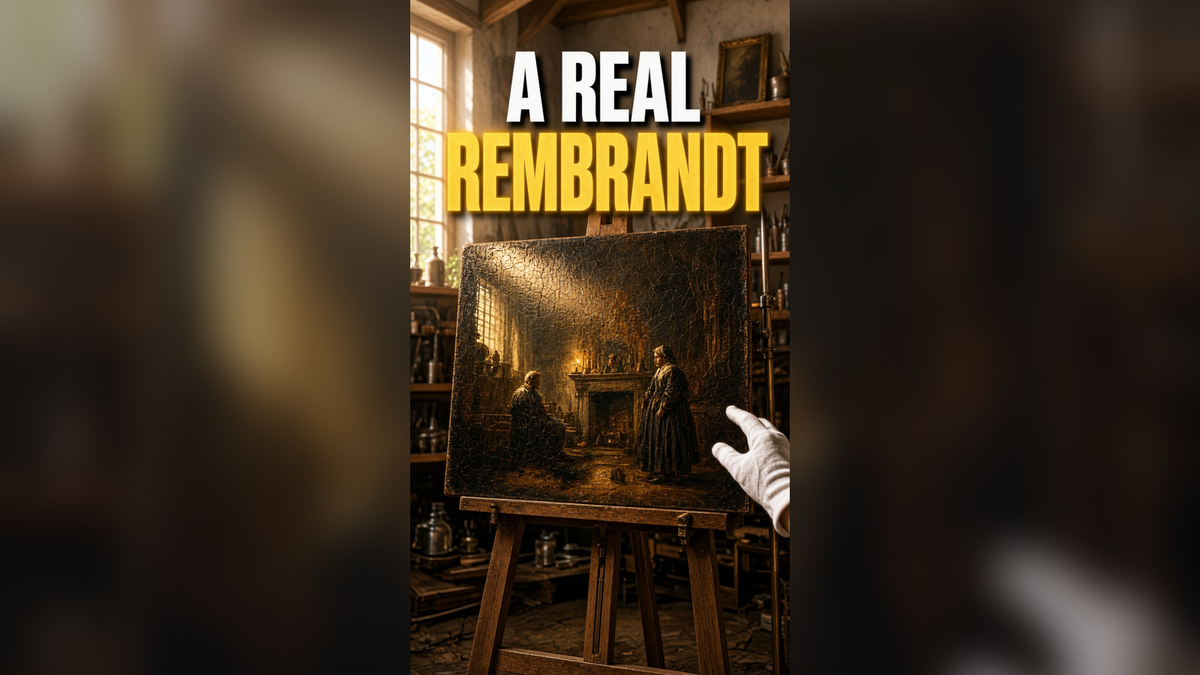
✓ Verified · cross-checked against 2 independent sources
In 1960, a painting of a startled old man was struck off the list of works by Rembrandt. A year later it was sold to a private collector and simply disappeared. For sixty-five years, nobody outside one family laid eyes on it.
Last March, the Rijksmuseum in Amsterdam announced that it is a Rembrandt after all.
The painting is called Vision of Zacharias in the Temple, and the date on it is 1633. It shows the moment the high priest Zacharias is told that he and his wife, both far past the age for it, will have a son. You never see the angel. You only see light spilling in from the upper right corner, and the look on the old man's face, which is pure disbelief.
Here's the part that makes this a story instead of a footnote. For most of the twentieth century, the people deciding what counted as a Rembrandt were often working from black-and-white photographs. This particular painting was in a private collection and nobody could get near it, so nobody who doubted it had ever stood in front of it. As the Rijksmuseum's curator of seventeenth-century art, Jonathan Bikker, told The Art Newspaper: "Before, you only had black-and-white photos, and all of the comparisons had to be done from memory."
Then the owner's two children inherited it. The panel had darkened with age, and they wanted it cleaned. So they brought it to the Rijksmuseum and asked a modest question: might this be by Jan Lievens, or Salomon Koninck?
The museum took two years to answer.
Bikker and paintings researcher Petria Noble put the panel through the same techniques the Rijksmuseum built for its long public restoration of The Night Watch. Every pigment in it turned up in Rembrandt's work from those same years. The way the paint was layered matched his technique. Macro-XRF scanning found the small changes of mind an artist makes partway through a picture, the kind a copyist has no reason to make. The signature held up. And dendrochronology, dating the wooden panel by its growth rings, confirmed that the 1633 on the front was telling the truth.
"It is a very emotional moment to find another Rembrandt," Bikker said.
The owners have asked to stay anonymous. But they did something quietly generous: they put the painting on long-term loan to the Rijksmuseum, where it went on public view on the fourth of March, for the first time since 1961. Now anyone who walks through that building can stand in front of it.
What stays with me is how ordinary the beginning was. Two people inherited a dark old painting and thought it deserved to be looked after properly. That's the whole inciting incident. No treasure hunt, no hunch, no expert on a mission. Somewhere near you there's almost certainly something nobody has looked at carefully in a long time. Things only get found because somebody finally looks.
Which almost-forgotten object in your family would you most like to have properly examined? Tell me in the comments.
Sources: rijksmuseum.nl · theartnewspaper.com
Enjoy good news? Get your daily dose of sunshine free →
This post may contain affiliate links; we may earn a small commission at no cost to you. AI disclosure: our videos are produced with AI tools (ElevenLabs voice, Pictory) with human research, fact-checking, and editorial review on every story.