
IT CAME BACK
✓ Verified · cross-checked against 2 independent sources
Gordon Mellish has used CPR to save at least ten people. Until this past July, he'd never used it on an otter.
Then he found himself on a dock in British Columbia, leaning over a pup that had stopped moving, with seconds to decide whether it was too late.
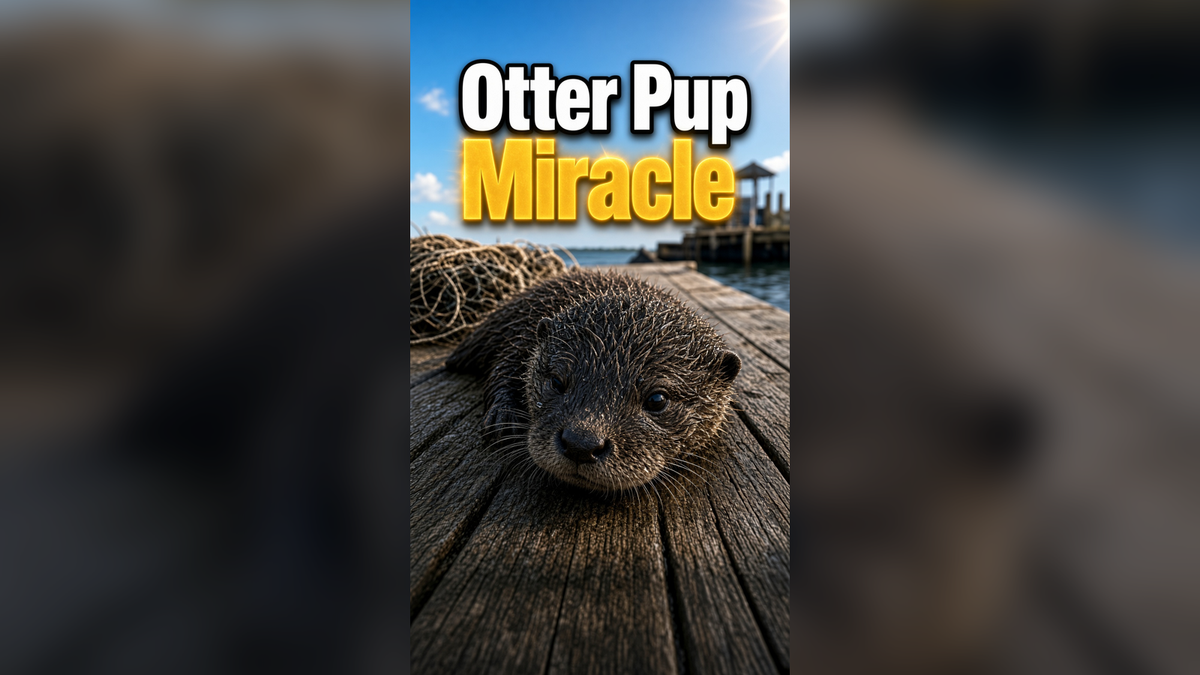
It started with a sound. Alert Bay sits on Cormorant Island, off the northern tip of Vancouver Island, and on the twenty-eighth of July, Mellish's niece and son-in-law heard something under the 'Namgis Dock. He described it to The Canadian Press as what sounded like babies crying. They ran to the end of the float. Three otter pups were caught in a fishing net in the water beside the float. Two of them were floating, able to breathe. The third one wasn't moving at all.
Anyone who has pulled a living thing out of cold water knows the arithmetic of that moment. You have seconds, not minutes, and no way of knowing whether they'll be enough.
Mellish brought the pup up onto the dock and cut it free of the netting. He started with gentle chest compressions, to pump the water out of the pup. When that wasn't enough, he put his mouth over the animal's nose and mouth and gave it, in his own words, half a breath of life.
It started breathing.
The other two swam straight to their mother the moment they were cut loose, though one of them bit down on his thumb and held on for about three seconds first. Mellish talked to it until it calmed down.
From there it stopped being one man's story. Police came. Wildlife volunteers came. Neighbours made calls, a rescue society on Vancouver Island agreed to take the pup, and someone drove it to a rehabilitation facility, where it spent several days recovering. The Alert Bay RCMP later described what Mellish had done as an act of remarkable composure and compassion.
Then came the part nobody planned.
When the pup was ready to go, its family couldn't be found, so the rescuers carried it down to the beach and set the cage about twenty feet from the water. It didn't bolt. It circled the cage about five times. It walked down to the water's edge. And then, Mellish said, it turned back, looked him eye to eye, nodded its head, and swam away.
Not long after, someone in the community spotted it again, back with its mother and its two siblings.
We've told a lot of rescue stories here, and they keep teaching the same thing. The heroism almost never belongs to one person. It belongs to a niece who didn't ignore a strange noise. To neighbours who picked up the phone. To a rehab centre with room for one more. Mellish put the whole thing about as plainly as it can be put: a life's a life, no matter what it is. Try to do your best to save it.
What's the most unexpected creature you've ever stopped to help? Tell me in the comments.
Sources: chroniclejournal.com · ctvnews.ca
Enjoy good news? Get your daily dose of sunshine free →
This post may contain affiliate links; we may earn a small commission at no cost to you. AI disclosure: our videos are produced with AI tools (ElevenLabs voice, Pictory) with human research, fact-checking, and editorial review on every story.