A $3 Vaccine Beats Malaria
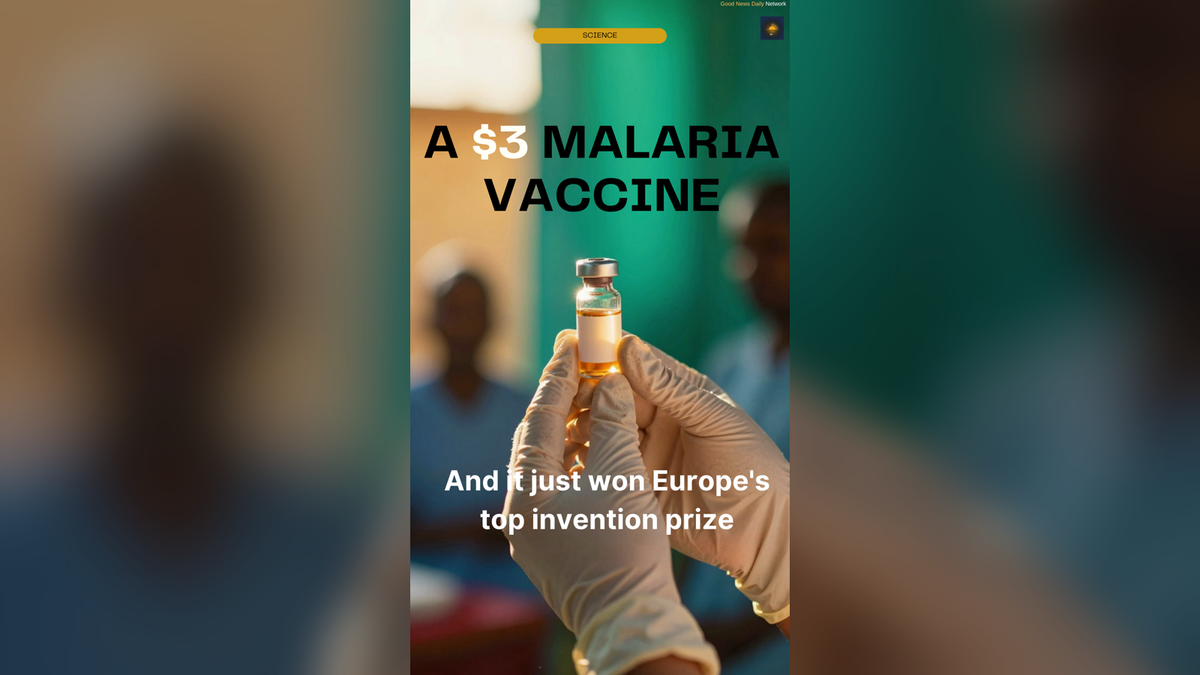
Sir Adrian Hill's R21/Matrix-M malaria vaccine costs about $3 a dose, works in an ordinary fridge, and just won Europe's top invention prize — and it's already protecting children in about 20 countries.
✓ Verified · cross-checked against 2 independent sources
A single dose costs less than a cup of coffee. It can sit in an ordinary refrigerator for two years. And it protects a child from one of the oldest, deadliest diseases humankind has ever faced. This morning, the scientist who made that possible is holding Europe's top prize for invention — and children in about twenty countries are safer because of it.
His name is Sir Adrian Hill, and if you passed him on the street you would never guess you were looking at one of the most consequential inventors alive. For more than a decade, he and his team at the University of Oxford's Jenner Institute chased a goal that had defeated researchers for a hundred years: a malaria vaccine that actually works, that ordinary clinics can afford, and that can reach the villages where it's needed most.
Malaria still kills more than half a million people every single year, and most of them are children under the age of five. For generations, the cruelest part of that story was the arithmetic. Even when a vaccine looked promising in a lab, it was often too expensive, too fragile, or too complicated to get into the arms of the kids who needed it. A breakthrough that never reaches a child isn't really a breakthrough at all.
That is the wall Adrian Hill set out to break. His vaccine is called R21/Matrix-M, and the numbers are the kind that make public-health experts sit up straight. In clinical trials, it reached roughly seventy-five to eighty percent protection. It costs less than three euros a dose. It stays stable for up to two years in a standard fridge, no special freezers required. And crucially, it was built to be made at enormous scale — the Serum Institute of India can turn it out by the hundreds of millions of doses a year. The World Health Organization recommended it back in 2023. Ghana was the first country to approve it, and today around twenty nations are rolling it out.
This month, the European Patent Office named Hill the winner of its European Inventor Award for 2026, honoring him in Berlin. But listen to how he accepted it. He said he was delighted to accept the prize "on behalf of the many hundreds of people who have contributed" over the past twelve years — the researchers in Oxford, the manufacturers in India, the scientists at study sites across Burkina Faso, Kenya, Mali and Tanzania. Hill has said his own drive came from time he spent in The Gambia, where he saw what malaria does to families up close.
And that's the part worth carrying with you today. This wasn't a lightning bolt. It was twelve years of stubborn, patient, unglamorous work by hundreds of people who refused to accept that a child dying of a mosquito bite was simply the way of the world. What would our world look like if we celebrated that kind of quiet persistence as loudly as we celebrate almost everything else?
Sources: irishtimes.com · siliconrepublic.com
Enjoy good news? Get your daily dose of sunshine free →
This post may contain affiliate links; we may earn a small commission at no cost to you. AI disclosure: our videos are produced with AI tools (ElevenLabs voice, Pictory) with human research, fact-checking, and editorial review on every story.
