
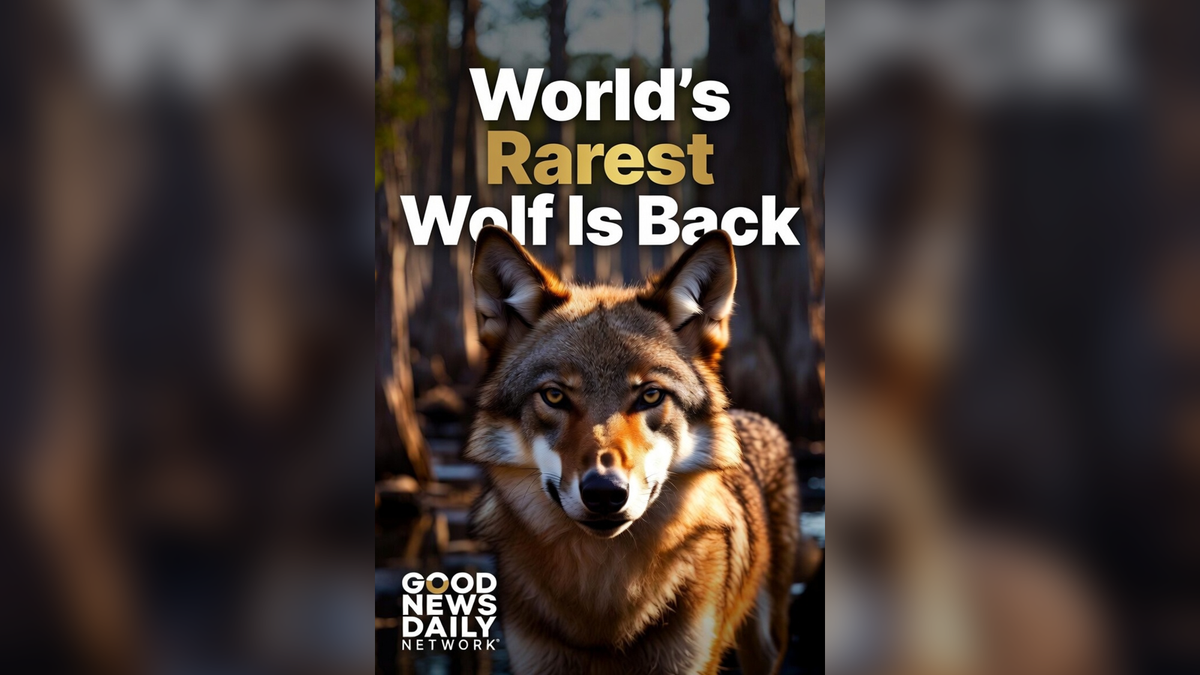
The World's Rarest Wolf Is Back
Only 22 red wolves are left in the wild — anywhere on Earth. This year that fragile population just grew by four new litters of pups, with up to sixteen surviving so far.
✓ Verified · cross-checked against 2 independent sources
Twenty-two. That's how many red wolves are left in the wild on the entire planet — and every single one of them lives in one corner of North Carolina.
Now picture getting word this year that four new litters of pups had just been born into that tiny, fragile population.
Red wolves are the most endangered wolf species in the world, and their story has never been a gentle one. They were hunted to near extinction by the 1970s. A recovery program brought them back to the wild swamps of eastern North Carolina in 1987, and by 2011 more than 130 were roaming free. Then came a hard decade — illegal shootings and shifting policy pushed their numbers down to as few as seven wolves left standing. Seven. For a species that once ranged across the entire southeastern United States, that is about as close to the edge as a wild population can get without disappearing for good.
This year, the U.S. Fish and Wildlife Service's Red Wolf Recovery Program announced something that hadn't happened in a long time: four litters, born in the wild, with somewhere between twelve and sixteen pups surviving their first few critical months. Three of those litters came from parent pairs who had already raised pups together the year before — and red wolves, as it turns out, mate for life, with older siblings and even grandparents pitching in to help raise the next generation. One litter arrived on private land, where a landowner chose to welcome red wolves onto his property rather than turn them away.
"It's inspiring to see these underdogs making another incredible comeback," said Will Harlan of the Center for Biological Diversity, one of the groups behind the recovery effort. Red wolves, he said, are thriving thanks to wildlife officials, landowners, and communities choosing to work together instead of against each other.
That part is really the whole story, isn't it? A species this close to vanishing doesn't come back because of one heroic act. It comes back because a lot of ordinary people, on ordinary days, decided a wild animal was worth the trouble. A biologist checking a den camera at dawn. A neighbor who said yes instead of no. A community that kept showing up, year after year, long after the headlines moved on to something else.
Twenty-two wild red wolves have now become twenty-two adults, plus a dozen or more brand-new pups — proof that even the narrowest paths back from extinction are still paths, as long as somebody is willing to walk them.
Sources: biologicaldiversity.org · wral.com
Enjoy good news? Get your daily dose of sunshine free →
This post may contain affiliate links; we may earn a small commission at no cost to you. AI disclosure: our videos are produced with AI tools (ElevenLabs voice, Pictory) with human research, fact-checking, and editorial review on every story.
