
Two Strangers Carried Him Home
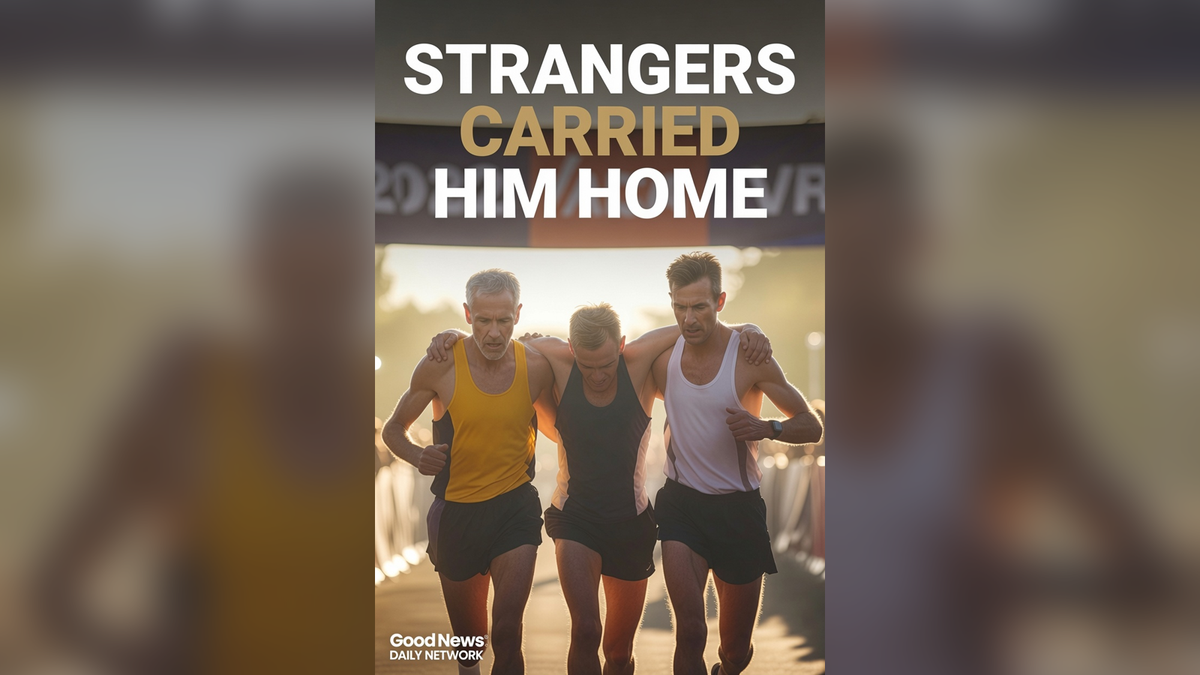
Two hundred strides from the Boston Marathon finish line, Ajay Haridasse's legs gave out. Strangers Aaron Beggs and Robson Oliveira stopped their own race to carry him across the line — even though it cost one of them his own personal best.
✓ Verified · cross-checked against 2 independent sources
Two hundred strides from the finish line of the Boston Marathon, Ajay Haridasse's legs simply stopped working.
He'd already fallen once. Then again. By the fourth time he hit the pavement on Boylston Street, he was ready to crawl the rest of the way home.
Haridasse is a fourth-year student at Northeastern University and the distance captain of the school's own running club — the guy who wrote the training plan his teammates used to get ready for this race. He'd held together for twenty-two miles before the cramping hit, hard and sudden, with severe dehydration setting in right as two-tenths of a mile stood between him and everything he'd trained for.
He fell. Got up. Fell again. By the time he passed his own mother and sister near the finish, his body had nothing left to give.
That's when two men who had never met him made a decision that cost them both something real. Aaron Beggs, a 40-year-old runner from Northern Ireland, felt Haridasse collapse beside him and put his arms out without thinking. "For some reason, my instincts decided to take over," he said afterward. Seconds later, Robson Oliveira, a 36-year-old runner from Brazil who was on pace for a personal best of his own, stopped too. "I knew I wouldn't have the strength to help him on my own," Oliveira said. "In that moment, I thought, 'God, if someone stops, I'll stop too and help him.'"
So they did. One arm each, they lifted a total stranger off the ground and half-carried him the last two-tenths of a mile, telling him only, "Just get there." He did. All three crossed together, in a time of two hours, forty-four minutes.
Here's what that moment actually cost them: if Haridasse had been left to crawl it in, he might not have qualified for next year's race at all. And Oliveira gave up what would have been his own personal best, just to make sure a stranger didn't have to finish alone. Neither man knew his name. Neither man had to stop.
Afterward, Haridasse and Oliveira both ended up in the medical tent — Oliveira, it turned out, was in worse shape than the man he'd carried, badly dehydrated from the effort. Both recovered quickly. Two days later, Haridasse was back at his co-op job at New Balance's headquarters. He told Northeastern's own news team, "I'm, like, completely OK now" — and that he still plans to run Boston again next year.
Here's the thing about a marathon nobody talks about: the number on the clock was never really the point. Twenty-six-point-two miles is long enough that, eventually, everyone runs out of something — legs, breath, will. What Beggs and Oliveira proved is that the race is also long enough for a total stranger to become exactly the person you needed, right when you needed them most.
Sources: news.northeastern.edu · goodnewsnetwork.org
Enjoy good news? Get your daily dose of sunshine free →
This post may contain affiliate links; we may earn a small commission at no cost to you. AI disclosure: our videos are produced with AI tools (ElevenLabs voice, Pictory) with human research, fact-checking, and editorial review on every story.
