He Couldn't Code. Now He Can.
A blind 14-year-old just coded independently in class for the first time — after a nonprofit spent years building a screen-reader fix into one of the world's most-used kids' coding platforms, working directly with blind and low-vision kids to design it.
✓ Verified · cross-checked against 2 independent sources
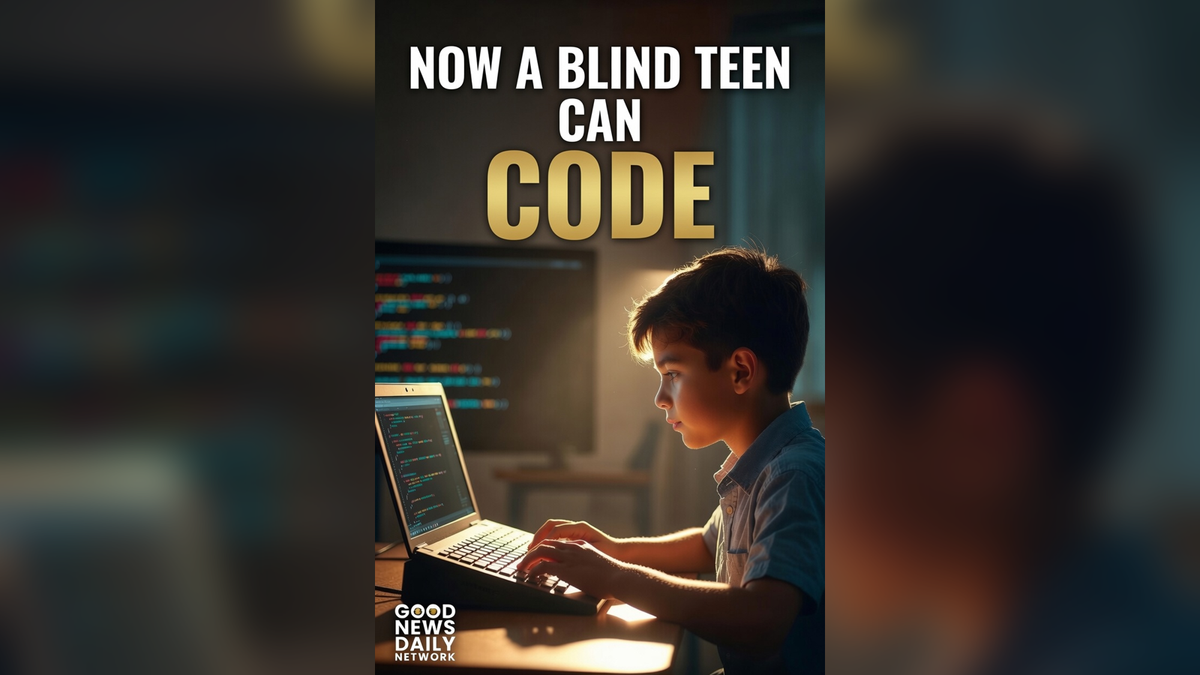
Fourteen-year-old Zac Herbert used to sit through his own computing class without really being part of it. Not because he couldn't keep up — but because the coding software every other student used had never been built to work with a screen reader.
This month, that finally changed. Not just for Zac, but for more than 41,000 blind and low-vision kids across the UK, and millions more around the world.
Here's the problem nobody talks about: almost every kid who learns to code starts with block-based programming — those colorful, drag-and-drop puzzle pieces you might recognize from Scratch. It's designed to make coding feel like play. But those blocks were built to be seen and dragged with a mouse, never to be read aloud. So for years, blind and low-vision students were quietly pulled out of the same lesson everyone else was getting, and handed something else instead — separate, and lesser.
Zac is a student at New College Worcester, a specialist school in England for blind and low-vision students. Before this year, he couldn't join his classmates in computer science the way they experienced it. He was taught apart from them, or given an alternate activity, while his class built and ran real programs.
Then the Micro:bit Educational Foundation — the nonprofit behind the BBC micro:bit, a pocket-sized computer used by more than 70 million kids in 85 countries — teamed up with Microsoft MakeCode and the Blockly team at the Raspberry Pi Foundation. Backed by Google's Blockly Accessibility Fund, they spent years building something nobody had built before: a way for a screen reader and a refreshable braille display to actually navigate block-based code. And instead of guessing what blind kids needed, they built it alongside them — co-designing every stage with children and young adults ages 8 to 18 who are blind or have low vision, working with specialist schools in England, the Netherlands, and the United States.
This month, it launched. Zac can now open Microsoft MakeCode, use his screen reader, and code right alongside his classmates — independently, for the first time.
"Every child deserves the opportunity to create with technology, regardless of their ability," said Lucy Gill, the Foundation's Head of Product. Her team didn't just fix one app — Blockly is the same engine running underneath Scratch, CodeAI, and MIT App Inventor, so this breakthrough could ripple out to nearly every major kids' coding platform in the world.
The RNIB estimates around 41,000 children in the UK live with vision loss. UNICEF puts the global number at 6 million. That's 6 million kids who've had one more door to the future quietly closed — until a team of engineers decided to actually ask them what they needed, and build it.
Sources: microbit.org · livingwithdisability.org
Enjoy good news? Get your daily dose of sunshine free →
This post may contain affiliate links; we may earn a small commission at no cost to you. AI disclosure: our videos are produced with AI tools (ElevenLabs voice, Pictory) with human research, fact-checking, and editorial review on every story.
